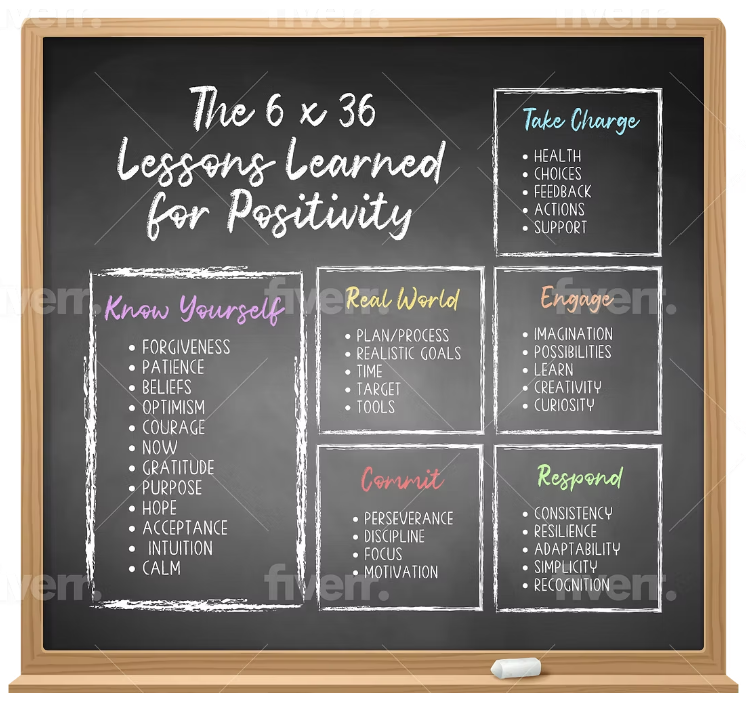
Positivity IQ Lessons

Discover Your Positivity Intelligence
Lessons I Learned to Increase Positivity for Success
There are countless books, programs, and practices related to positive thinking, happiness, and success. And they all have legitimate and admirable goals and often good advice.
I've written two prior books about how to achieve your goals through manifestation and other aspects of Positivity.
The first book, The Manifestation Formula, focused on metaphysics and philosophies. The second book, Modern Positivity, introduced the full concept of measuring your level of positive thinking with the Scorecard.
However, while using the principles for myself, hearing from readers, and additional research, I realized that more direct tools were needed to close the loop on the Positivity concepts.
The most frequent questions were:
Where do I start? How do I begin? How do I keep going?
We all wanted to know :
What were the most important factors for success that I could use for my goals?
How do some people seem to succeed so easily?
Why do some people fail despite their efforts?
Can we identify the patterns of success?
Can we learn to use our thoughts, choices, and actions more effectively?
Are there fundamentals that can be easily described, simplified, applied, and measured?
We always have two goals:
Goal #1. The Want Goal. Something you want to obtain or achieve. A new job, more financial security, health, wellness and others. Each goal has a built-in measurement and you see the progress you are making.
Goal #2. The Belief Goal. An absolute necessity is to have sustainable confidence and Positivity to invest the time, motivation, discipline, and perseverance in pursuit of your goal.
You can't easily reach success if you have conflicts - a strong desire for something while simultaneously having little or no confidence in your ability to achieve it.
Discover Your Positivity Intelligence and The New Guide
present the lessons I learned, and what I had to unlearn, for sustainable Positivity Intelligence.
The 6 Core Lesson Types:
After developing an extensive list of techniques and practices, I overwhelmed myself with too much information. I consolidated everything into six categories:
1. Beliefs—about myself and what truly matters to me
2. Attitudes—understanding and managing my personality traits
3. Engagement—trying new ideas, refining constantly
4. Commitment—doing the work and sticking with the plan
5. Connection—making choices, taking action, keeping it simple
6. Response—staying aware, adapting, recognizing opportunities
I used different practices at different points in my Positivity training. Some lessons I learned quickly. Others require daily management.
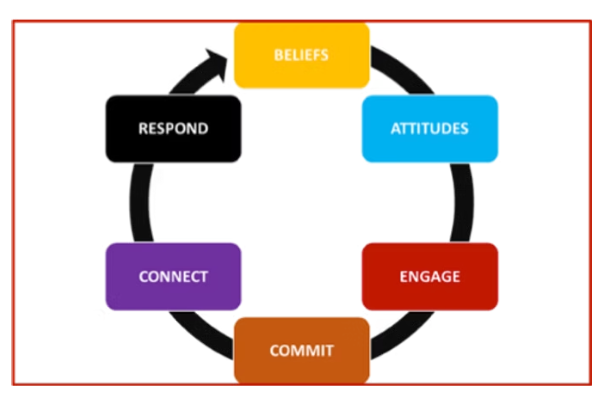
The 6 x 36 Lessons I Learned for Positivity IQ